
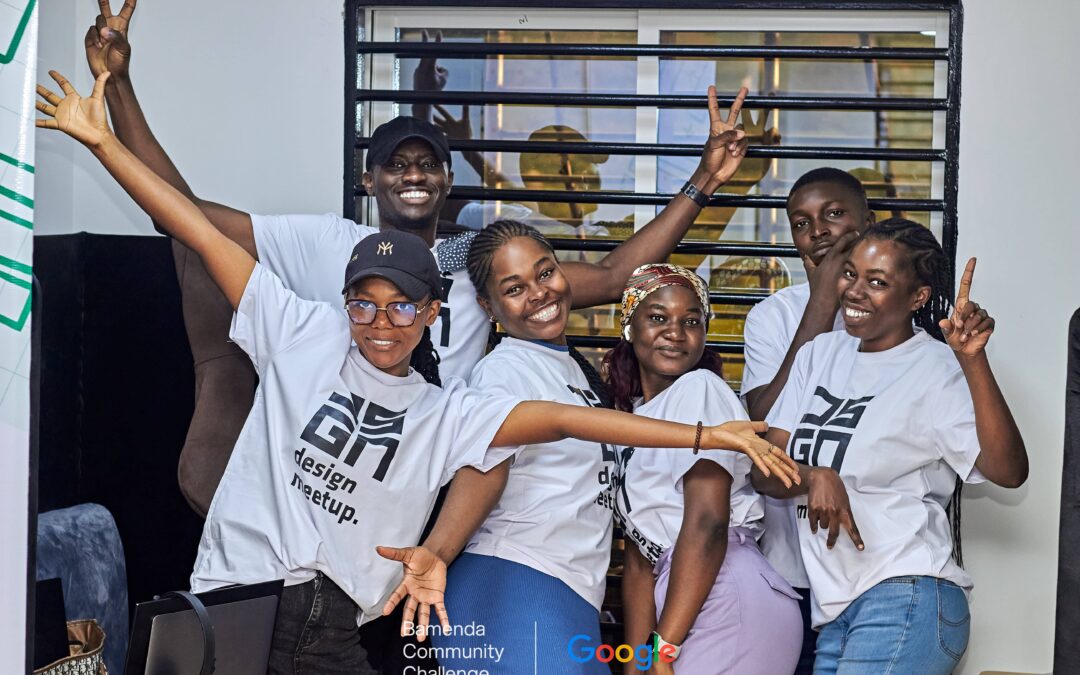
Notes from Version 10 — the first edition to leave Buea
By Design Meetup · 19-06-2026 · 4 min read
There is a specific kind of uncertainty that comes with taking something that works and asking it to work somewhere new. It is not doubt exactly. It is closer to the feeling of reading a recipe in one language and cooking it in a kitchen where everything is in a different place. You know the dish. You have made it before. But you are not entirely sure the dish knows itself well enough to survive a new environment.
When Design Meetup decided to leave Buea after nine editions, the decision was straightforward on paper. The tenth version would happen in Bamenda as part of the Bamenda Community Challenge.
What was less straightforward was everything underneath that decision. Whether the format would hold in a room full of people who had never attended before. Whether the conversations that worked in Buea would land with an audience built differently, shaped by a different creative environment and a different set of professional frustrations. Or worse still, whether anyone would show up at all.
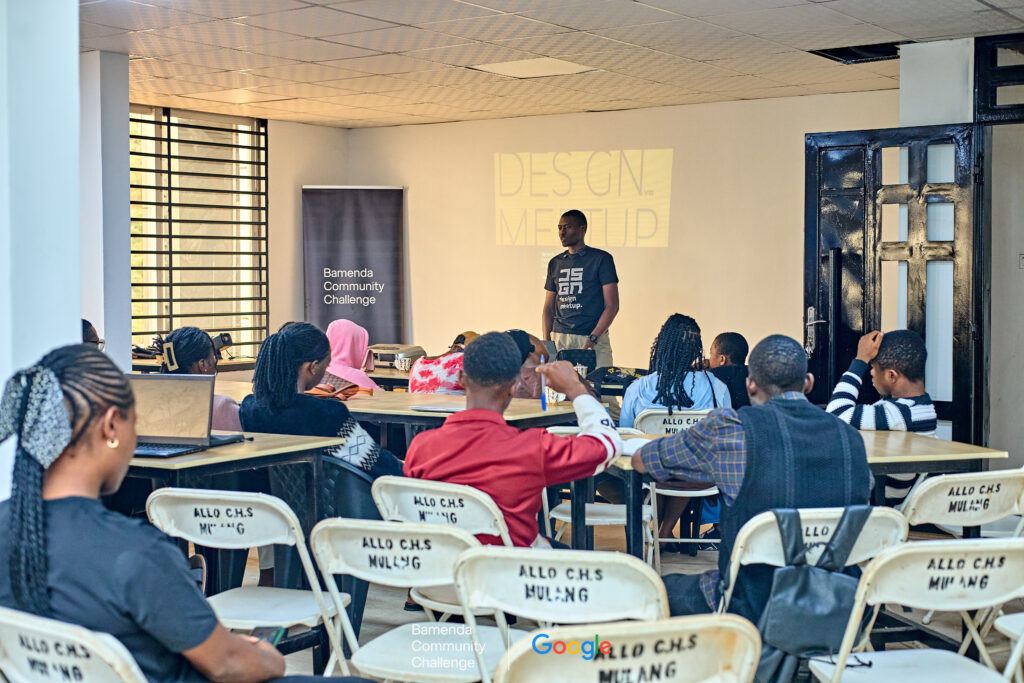
Bamenda is not Buea. That statement sounds obvious but it matters more than it sounds. Buea has a small but dense creative professional community where people already know each other, where networks exist, where the phrase “Design Meetup” means something to people who have never attended but have heard someone mention it. Bamenda, on the other hand, had none of that scaffolding. It had designers. What it did not yet have was a design conversation. And nobody knew, not really, whether those two things were close enough to the same thing that the event would feel like it belonged.
By the end of two days, the room answered that question on its own. Not through attendance numbers, but through the kind of questions it asked.
Day 1 carried three talks: The Business of Design from Amin Jefferson, who started Design Meetup; Product Design from Bill-Elton; and Motion Design from Miriam Vagansi.
What stood out to the speakers fairly early was the makeup of the room. Most of the people in attendance were beginners, and it showed in the questions; “how do I grow as a designer”, “what tools are worth learning at this stage”, “where do I even start”. But beneath these, a sharper question kept resurfacing from the more experienced designers in the room: is it advisable to raise prices, and does it matter whether the client is old or new?
Pricing, depends first on the actual scope of the work in front of you, and second on understanding the market you are actually selling into. A designer in Cameroon is not pricing into the same economy as a designer in the United States, and pretending otherwise does not make the invoice easier to send it just makes it harder to collect.
“The advice was not to charge less. It was to charge with an honest read of where you are charging from.”
Day 2 moved the conversation from the individual designer to the collective one. The panel discussion on growing the design community in Cameroon brought together Lewis, Amin Jefferson, Bill-Elton, Miriam Vagansi, and Shembom Estella, and one theme dominated the room more than any other: what does artificial intelligence actually mean for design in Africa.
The panel did not settle for a simple verdict. Instead, the conversation moved through three distinct identities AI can take on, depending entirely on how a designer chooses to relate to it.
It becomes a threat when a designer’s entire value proposition is execution; the ability to produce a deliverable and nothing more. That kind of value is the easiest for a tool to absorb.
It becomes a tool when a designer treats it as exactly that – something that removes friction from production so more time can go toward thinking, strategy, and the parts of design that still require a human read of a human problem.
And it becomes an opportunity when designers use it to reach markets, clients, and possibilities that distance and infrastructure had previously made difficult to access; which, for a design community building itself outside the usual centers of opportunity, is not a small thing to consider.
A community does not form because the people exist.

People exist everywhere. A community forms because someone creates a reason for those people to be in the same room at the same time with a shared frame of reference. The frame of reference in Bamenda was the gap between what designers know how to do and what they know how to charge for doing it. Between skill and income. Between craft and career. Between passion and sustainability.
That frame did not need to be invented. It was already real and already felt. What Design Meetup did was name it out loud in a room, which turned a private frustration into a shared one — which is the first and most essential step toward anything changing.
Every community that exists today began the same way. Someone, somewhere, decided to gather people around something. Not because the community already existed. Because they believed it could.
Bamenda had designers before Design Meetup arrived. What it did not have was a gathering point.